
AUTHENTICITY | NON REPUDATION | INTEGRITY | CONFIDENTIALITY

© PT Solusi Identitas Global Net.
All Rights Reserved.

Pergeseran tren manajemen rumah sakit menuju digitalisasi layanan kesehatan telah mengubah cara tenaga medis bekerja. Peran Tanda Tangan Elektronik kini menjadi bagian penting dalam proses pencatatan dan validasi data pasien. Dokter dan perawat dapat mendokumentasikan riwayat penyakit, hasil laboratorium, hingga resep obat secara cepat dalam satu sistem terpusat. Dengan sistem ini, akses data menjadi lebih instan sehingga tim medis bisa langsung melihat informasi pasien saat dibutuhkan.
Dalam ekosistem tanpa kertas, persetujuan digital menjadi alat bukti yang sah. Dokter tidak perlu lagi datang ke bagian administrasi hanya untuk menandatangani dokumen. Dokter cukup mengikuti Cara Buat Tanda Tangan Elektronik untuk menandatangani dokumen langsung dari perangkat digital. Efisiensi ini mengurangi antrean administrasi, mempercepat tindakan medis, sehingga penanganan pasien bisa dilakukan lebih cepat dan tepat.
Pemerintah telah menetapkan aturan terkait pengelolaan rekam medis digital. Aturan ini tertuang salah satunya dalam Permenkes Nomor 24 Tahun 2022 tentang Rekam Medis. Regulasi ini mewajibkan fasilitas kesehatan menyelenggarakan rekam medis elektronik menggunakan sistem yang terverifikasi dan tersertifikasi. Dengan aturan ini, dokumen seperti resep dan surat rujukan tetap memiliki kekuatan hukum meski ditandatangani secara digital.
Sebagai pengelola, Anda harus memilih platform yang sesuai regulasi tersebut. Tidak semua layanan memenuhi standar hukum yang berlaku, sehingga penting memastikan penyelenggara sudah diakui sebagai PSrE oleh Komdigi. Langkah ini akan melindungi tenaga medis dari risiko hukum akibat kesalahan administrasi.
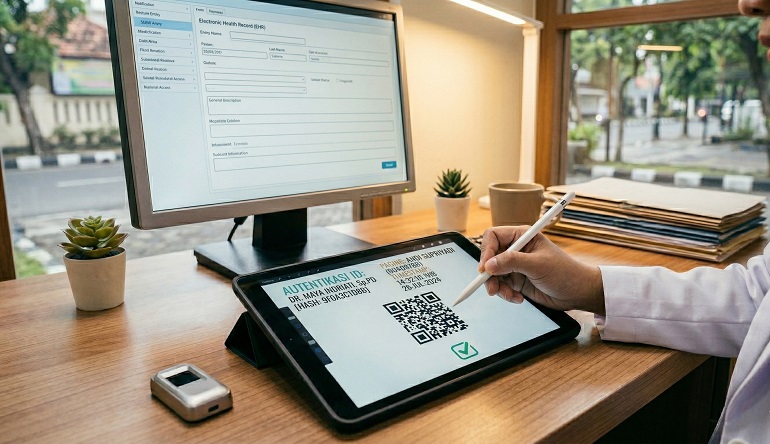
Keamanan data pasien adalah tanggung jawab utama setiap fasilitas kesehatan. Rekam medis berisi data sensitif yang sangat berharga. Jika bocor, dampaknya bisa merusak reputasi rumah sakit dan menimbulkan sanksi besar. Di sinilah Peran Tanda Tangan Elektronik menjadi penting.
Teknologi ini menggunakan sistem enkripsi untuk melindungi data. Setiap perubahan pada dokumen akan tercatat secara otomatis dalam jejak audit. Dengan sistem ini, data tidak mudah diubah atau disalahgunakan. Keamanan pasien tetap terjaga dalam sistem digital.
Pemalsuan resep menggunakan kertas masih menjadi masalah serius karena mudah dipalsukan atau ditiru. Hal ini sering dimanfaatkan untuk mendapatkan obat tertentu secara ilegal. Penggunaan Tanda Tangan Digital menjadi solusi efektif. Sistem akan memverifikasi identitas dokter secara otomatis sebelum resep diproses.
Dengan cara ini, pemalsuan bisa dicegah. Ini menunjukkan betapa pentingnya Peran Tanda Tangan Elektronik dalam menjaga integritas layanan medis. Kepercayaan pasien terhadap layanan rumah sakit pun ikut meningkat.
Integrasi sistem rumah sakit membuat alur kerja lebih efisien. Informasi dapat dibagikan antar divisi tanpa hambatan. Tidak ada lagi perpindahan berkas fisik yang memakan waktu, sehingga proses pelayanan menjadi lebih cepat. Pasien tidak perlu menunggu lama hanya untuk administrasi.
Penerapan sistem ini juga menunjukkan Peran Tanda Tangan Elektronik dalam mempercepat persetujuan antar bagian. Beberapa manfaat yang bisa dirasakan:
Manfaat ini makin terasa ketika setiap divisi memakai platform tanda tangan elektronik yang sama. Data pasien pun tidak perlu diinput ulang secara manual di setiap unit.
Perbandingan berikut menggambarkan selisih efisiensi antara pengelolaan rekam medis fisik dan rekam medis digital terpadu.
| Kriteria Penilaian | Rekam Medis Fisik | Rekam Medis Digital Terpadu |
|---|---|---|
| Pencarian berkas | Butuh waktu hingga belasan menit | Instan dalam hitungan detik |
| Risiko kehilangan | Rawan hilang dan rusak | Terlindungi sistem pencadangan cloud |
| Aksesibilitas data | Terbatas di ruang arsip | Bisa diakses dokter dari mana pun |
Data pada tabel ini menunjukkan bahwa pencarian berkas jadi lebih cepat dan risiko kehilangan dokumen jauh berkurang. Rumah sakit yang sudah beralih ke sistem digital terpadu juga lebih siap menghadapi audit maupun proses klaim asuransi.
Agar implementasi berjalan lancar, rumah sakit perlu menyiapkan strategi yang matang. Semua tenaga medis harus memahami sistem baru ini. Edukasi penting agar transisi berjalan tanpa mengganggu layanan. Berikut tahapan yang bisa dilakukan:
Proses ini akan membantu adaptasi berjalan lebih terarah. Staf yang terlatih dengan baik akan lebih percaya diri menggunakan sistem baru setiap hari.
Perkembangan sistem kesehatan modern tidak lepas dari teknologi digital. Dalam hal ini, Peran Tanda Tangan Elektronik sangat penting untuk memastikan legalitas dan keamanan data pasien. Jangan biarkan proses administrasi yang rumit menghambat pelayanan di fasilitas kesehatan Anda. Saatnya beralih ke sistem yang lebih cepat dan aman dengan dukungan Peran Tanda Tangan Elektronik dari ezSign.
Dengan ezSign, Anda bisa mengelola dokumen medis secara digital, legal, dan terintegrasi. Proses jadi lebih praktis, tenaga medis lebih fokus pada pasien, dan risiko kesalahan administrasi bisa ditekan. Segera optimalkan sistem Anda sekarang juga. Hubungi kami melalui ezSign dan mulai terapkan solusi Tanda Tangan Digital tepercaya untuk layanan kesehatan modern.
Apakah rekam medis elektronik wajib menggunakan tanda tangan elektronik?
Ya, Permenkes terbaru tentang rekam medis mensyaratkan sistem autentikasi yang terverifikasi agar sah secara hukum.
Apakah resep digital yang ditandatangani secara elektronik tetap sah?
Sah, selama diterbitkan melalui sistem yang telah diverifikasi dan sesuai standar PSrE yang diakui Komdigi.
Bagaimana rumah sakit memulai migrasi ke tanda tangan elektronik?
Rumah sakit bisa memulai dengan audit infrastruktur, memilih penyedia sertifikasi resmi, lalu menguji coba pada satu unit layanan.